Managed Technology
How One Provider Can Simplify Phones, Cabling, Security, and IT Support
Most businesses do not plan to end up with too many technology vendors. It usually happens slowly.
One company installs the phone system. Another handles the cabling. A different vendor supports the network. Someone else installs cameras or access control. An IT provider manages computers and servers. A carrier handles internet or phone service. Each piece may make sense on its own, but over time the business is left managing a collection of vendors instead of one connected technology environment.
That can create problems when something goes wrong.
A phone issue may actually be a network issue. A camera problem may be tied to cabling. Slow systems may be related to the switch, firewall, internet provider, or device configuration. When each vendor owns only one part of the environment, the business often has to coordinate the troubleshooting itself.
Using one provider for phones, cabling, security, and IT support can simplify that experience. It gives the business a clearer point of accountability, fewer handoffs, and a more practical way to manage technology as one connected system.
Technology Problems Rarely Stay in One Category
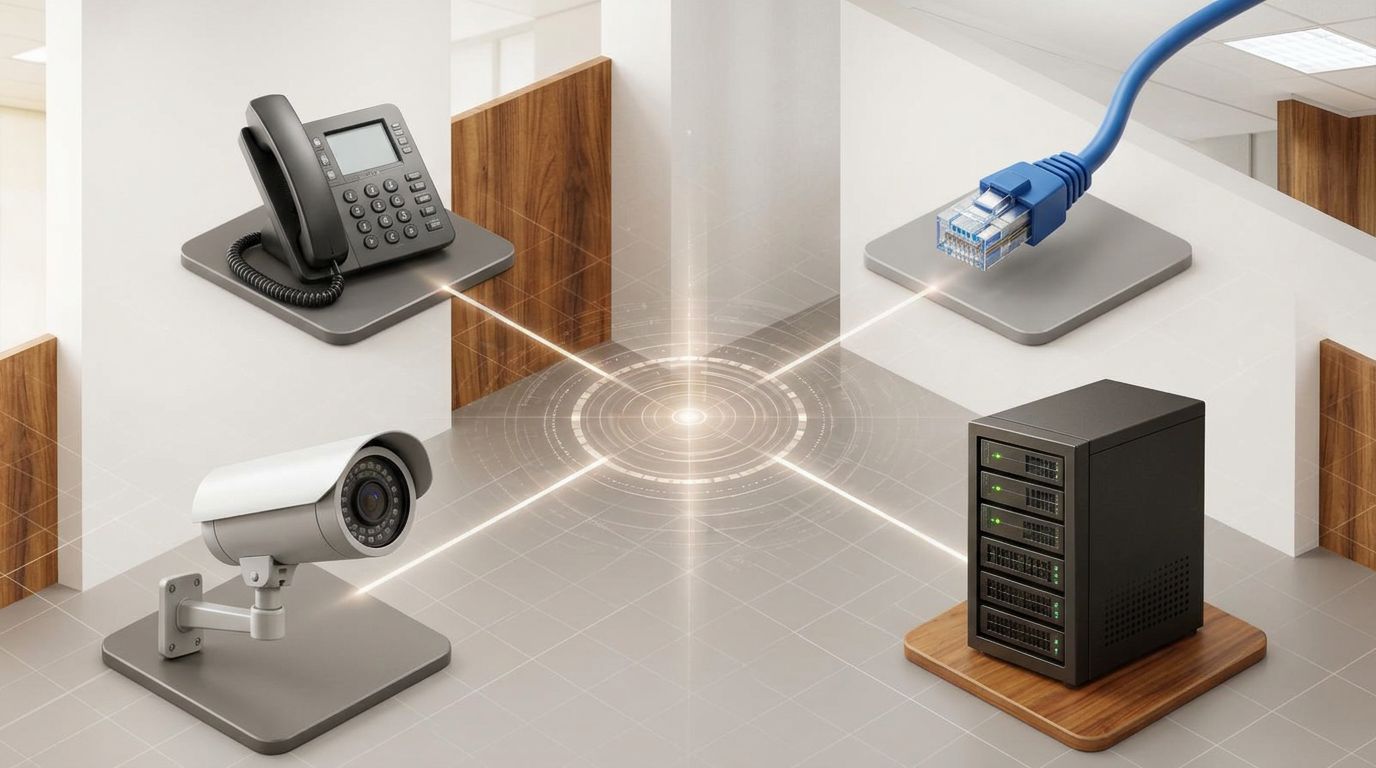
Business technology is connected. Phones, cabling, cameras, access control, Wi-Fi, servers, internet, and computers all depend on the same underlying environment.
That is why a problem that looks simple at first can become difficult to solve.
If calls are dropping, the issue could be the phone platform, internet connection, firewall, local network, cabling, or device setup. If cameras are not loading properly, the problem could be bandwidth, storage, switch capacity, power, configuration, or the camera system itself. If employees complain about slow systems, the source may be tied to hardware, Wi-Fi, network design, or server performance.
When vendors are separated, each provider may only check their own piece. The phone vendor says the phones are fine. The internet provider says the circuit is working. The IT provider says the computers look normal. Meanwhile, the business still has the problem.
A single provider cannot make every issue disappear, but it can reduce the back-and-forth. The team looking at the problem has a broader view of the environment and can troubleshoot across connected systems instead of stopping at one boundary.
Fewer Vendors Means Fewer Handoffs
Every vendor handoff creates room for delay.
A business may open a ticket with one provider, wait for a response, explain the issue, get referred to another vendor, repeat the story, schedule another visit, and wait for both companies to agree on the cause. Even when everyone is trying to help, the process can become slow and frustrating.
That is especially painful when the issue affects daily operations.
Phones need to work because customers call. Cabling needs to support reliable connectivity. Security cameras and access control need to protect people and property. IT systems need to stay available because employees depend on them all day.
When one provider supports the full environment, the process becomes cleaner. The business knows who to call, and the provider can look at the issue more completely.
| Fragmented vendor model | Single-provider model |
|---|---|
| Multiple support numbers | One main point of contact |
| Vendors may blame each other | Broader ownership of the environment |
| Troubleshooting stops at vendor boundaries | Problems can be reviewed across systems |
| More coordination for the business | Less internal vendor management |
| Separate upgrade conversations | More connected planning |
| More risk of mismatched systems | Better alignment across technology decisions |
For busy owners, office managers, operations teams, and administrators, this matters. They should not have to become the project manager every time a technology issue crosses categories.
One Provider Can Design the Environment More Intentionally
Many technology issues start before anything breaks. They begin during planning.
A business may add a phone system without reviewing network readiness. Cameras may be installed without considering storage, bandwidth, or future expansion. A new office may be wired without enough thought about desk layout, Wi-Fi coverage, access points, or growth. IT systems may be upgraded without considering how they affect phones, security, or daily workflows.
When vendors work separately, each one may solve only the immediate request.
One provider can take a wider view. If the business is planning a move, remodel, new office, phone upgrade, security project, or IT refresh, the provider can think through how each piece affects the others.
For example, a new cloud phone system may require network checks, cabling review, firewall settings, internet reliability, and user training. A security camera project may require cabling, switch capacity, power over Ethernet, storage planning, and remote access. An office buildout may need structured wiring, phones, Wi-Fi, cameras, access control, and IT support planned together.
That kind of planning reduces surprises.
Security and Access Control Depend on the Network
Security camera and access control systems are not separate from the rest of the technology environment.
Modern security systems often rely on IP cameras, cloud or local storage, mobile monitoring, real-time alerts, network access, and integrations with existing systems. Liberty’s security camera and access control services include customized systems, real-time alerts, cloud and local storage options, mobile access, and professional installation and maintenance.
That means security design should not happen in isolation.
If the network is weak, cameras may lag. If cabling is poor, devices may fail. If storage is not planned properly, footage may not be available when needed. If access control is difficult to manage, staff may create workarounds that reduce security.
When the same provider understands phones, cabling, security, and IT, security projects can be planned with the technical foundation in mind. That helps the system work better after installation, not just look good on the proposal.
Cabling Is the Foundation People Forget About
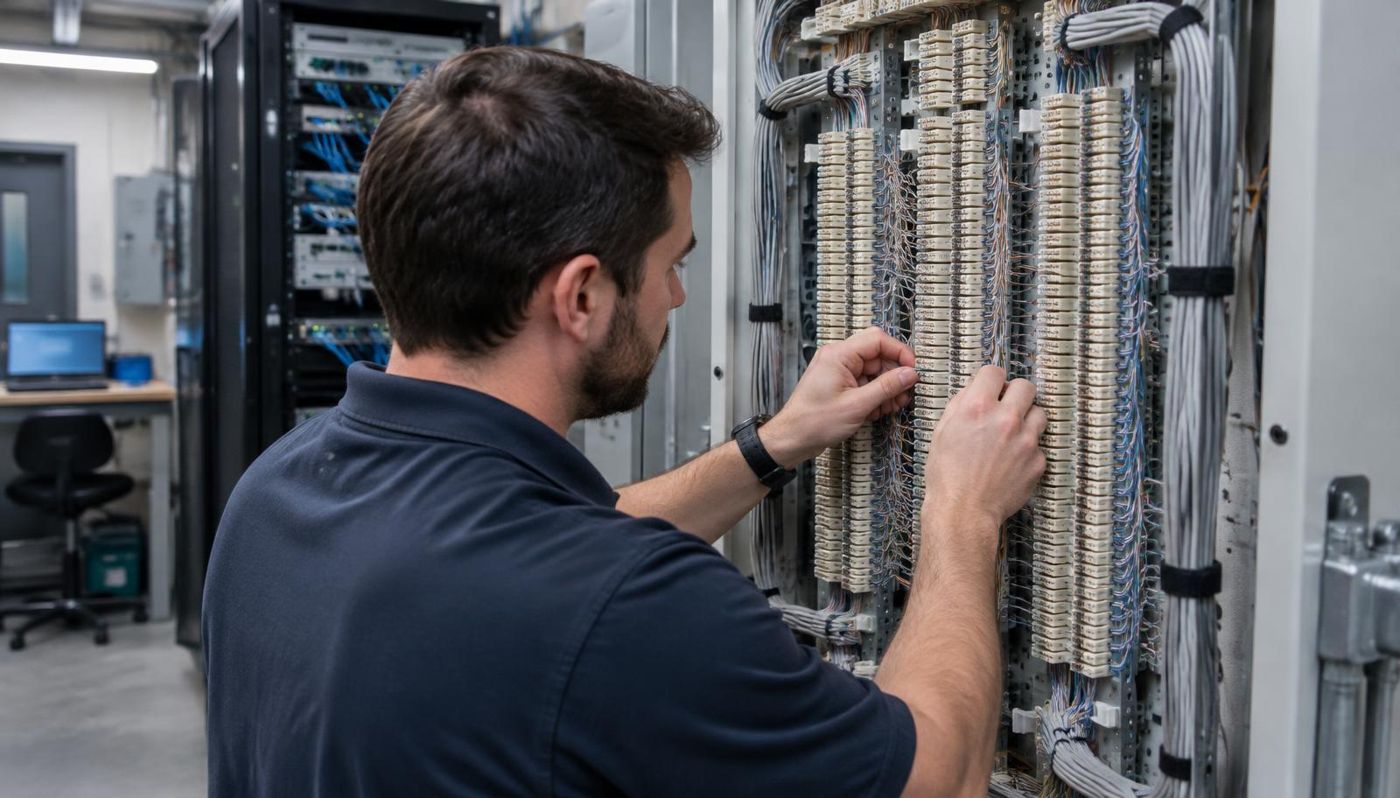
Cabling is easy to overlook because it is not always visible once the work is done. But it supports almost everything.
Phones, computers, access points, security cameras, printers, conference rooms, servers, and network equipment all depend on the quality and planning of the cabling infrastructure. Poor cabling can create frustrating problems that look like software, internet, or hardware issues.
A business may replace equipment and still have performance problems because the underlying wiring was never planned well. Or it may expand into a new space and discover too late that the cabling does not support the number of users, devices, or rooms needed.
This is why cabling should be part of the broader technology conversation.
A provider that understands both infrastructure and daily business technology can help plan cabling around current and future needs. That includes desk locations, conference rooms, wireless access points, security cameras, door access, phone placement, and equipment closets.
Good cabling does not get attention when it works. It prevents problems that no one wants to deal with later.
Consolidated Support Makes Budgeting Easier
Technology costs can become hard to track when services are spread across multiple providers.
There may be one bill for phone service, another for internet, another for IT support, another for security, another for cabling projects, and separate charges for maintenance or upgrades. Even when the total cost is reasonable, it can be difficult to understand what the business is actually paying for and where overlap exists.
A single provider can help simplify planning.
That does not mean every service must be bundled in the same way for every business. It means the business has someone looking at the full picture: which systems are working, which are aging, where costs are duplicated, what upgrades are needed, and which projects should be prioritized.
Liberty positions its service around customized technology plans, fixed pricing, and a no-charge technology evaluation, which can help businesses review needs before making changes. For leadership, that creates more clarity. Instead of reacting to separate vendor recommendations, the business can make decisions based on one connected plan.
It Also Improves Accountability After Installation
The installation is only the beginning.
Phones need updates and support. Networks need maintenance. Cameras may need adjustment. Access control users may change. Cabling may need expansion. IT systems may require ongoing support as the business grows.
If each system has a different vendor, support can become complicated after the original project ends.
One provider simplifies that. The business has a relationship with a team that understands the setup, the history, the users, and the goals behind the original design. That context makes support easier because the provider is not starting from zero every time something changes.
Liberty’s IT services include professional desktop and server support, cloud expertise, predictable IT budgeting, and consultation around managed Ubiquiti networks. That kind of support matters because phones, networks, security, and IT are not static. They need to keep working as the business changes.
When a Single Provider Makes the Most Sense
A single-provider model is especially useful when the business does not have time to manage multiple vendors or when technology systems overlap heavily.
It may be the right fit when a company is moving offices, adding locations, updating phones, installing cameras, improving access control, refreshing IT support, or struggling with too many vendors already.
It is also useful when the business wants one team to understand the full environment rather than separate companies managing disconnected pieces.
A good provider should not force every business into the same package. The value comes from evaluating what the business needs, explaining the options clearly, and building a practical plan around the current environment.
How Liberty Communications Helps
Liberty Communications works as a single point of contact for business technology, including VoIP, hosted cloud phone systems, traditional phone systems, office wiring, carrier services, security cameras, access control, and IT support.
That matters because these systems often overlap in real life. Phones depend on the network. Cameras depend on cabling. Access control depends on secure management. IT support connects the user experience across devices, systems, and locations.
Instead of asking the business to manage several disconnected providers, Liberty helps evaluate the environment, identify the right solutions, and support the technology after installation.
For small and mid-sized businesses, that can reduce confusion, save time, and create a more reliable technology foundation.
Final Thoughts
Phones, cabling, security, and IT support are often treated as separate categories, but inside a business they work together every day.
When those systems are managed by too many vendors, the business can end up dealing with delays, handoffs, unclear ownership, and disconnected planning. One provider can simplify the experience by giving the company a clearer point of contact, better system alignment, and more practical support when issues come up.
Liberty Communications helps businesses simplify technology by bringing phones, cabling, security, and IT support into one customized plan.